
After a leak or flooding
If drywall, insulation, flooring, or framing stayed wet for more than a day or two, testing and moisture checks help confirm whether conditions supported growth and where to open up for inspection.
Serving Boston, Massachusetts & surrounding areas
Mold Inspection · Boston, Massachusetts
If you smell musty odors, see staining, or have had leaks or flooding, a clear inspection and lab testing can tell you what you are dealing with and what to do next.
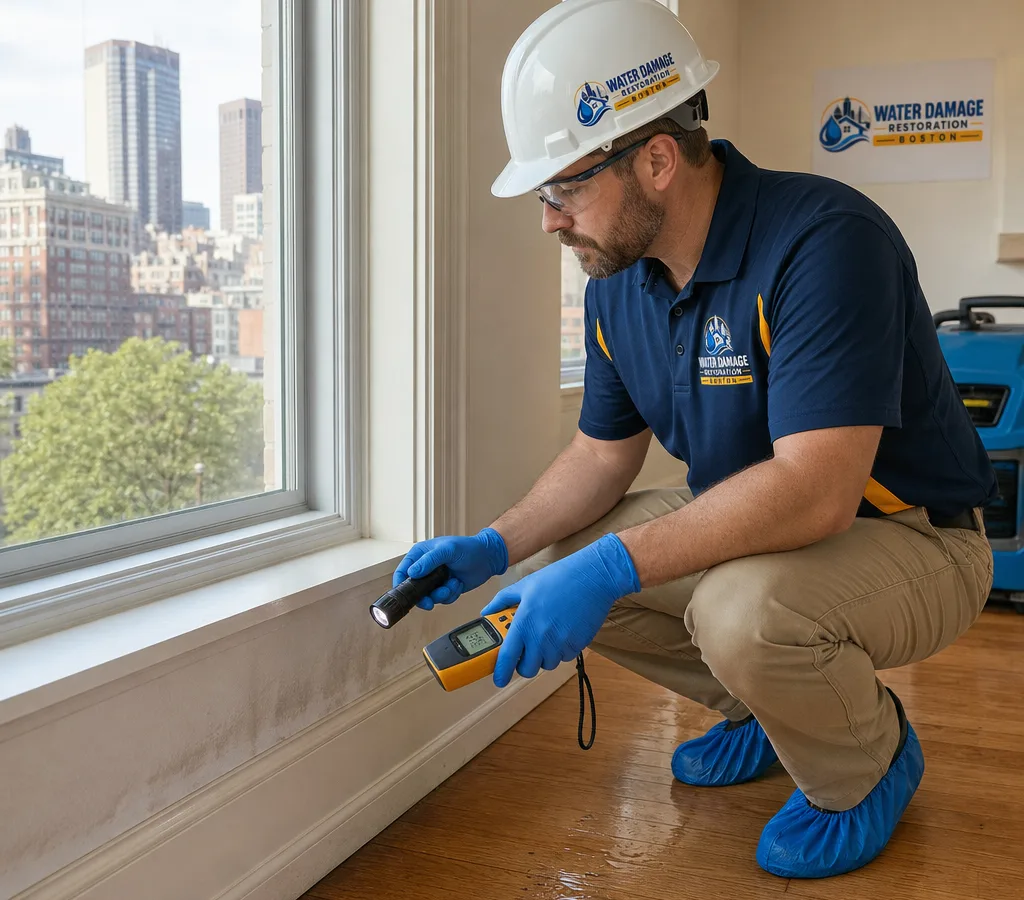
Find the Moisture, Confirm the Conditions
A proper mold inspection in Boston starts with one goal: identify where moisture is coming from and confirm whether mold is present, not guess from a photo or a quick look. Water Damage Restoration Boston provides mold inspection Boston services for property owners who need reliable findings, documented results, and practical next steps.
Boston buildings create a few repeat patterns we see often. Older housing stock and multi-unit layouts can hide moisture in wall cavities, around radiators and piping chases, and under finished basements. Coastal humidity and dense neighborhoods also make ventilation and drying more challenging after leaks. If you have had a roof leak, plumbing issue, ice dam, damp basement, or a long-running bathroom exhaust problem, mold growth can follow when materials stay wet.
Our mold testing Boston process combines a visual assessment with moisture mapping and sampling when it helps answer a real question—for example, whether suspect growth is mold, whether spores are elevated compared to outdoors, or whether a clearance check makes sense after cleanup. You get a written summary you can use for landlords, tenants, property managers, or your own decision-making.
If your situation started with a burst pipe, storm intrusion, or another moisture event, we will help you choose the right next step.
Evidence-Based Inspection
A thorough inspection is part building-science, part detective work. During a mold inspection Boston visit, we focus on moisture sources, affected materials, and whether sampling is needed to confirm the situation.
Lab results identify spore types and relative levels for samples taken. We explain what the results mean in plain language and how they line up with the building conditions found.
Common Boston problem spots include garden-level units and finished basements, especially in parts of Dorchester and Roxbury where older foundations and tight lots can make water management and ventilation harder, and in South Boston where many properties are close-set and air movement can be limited.
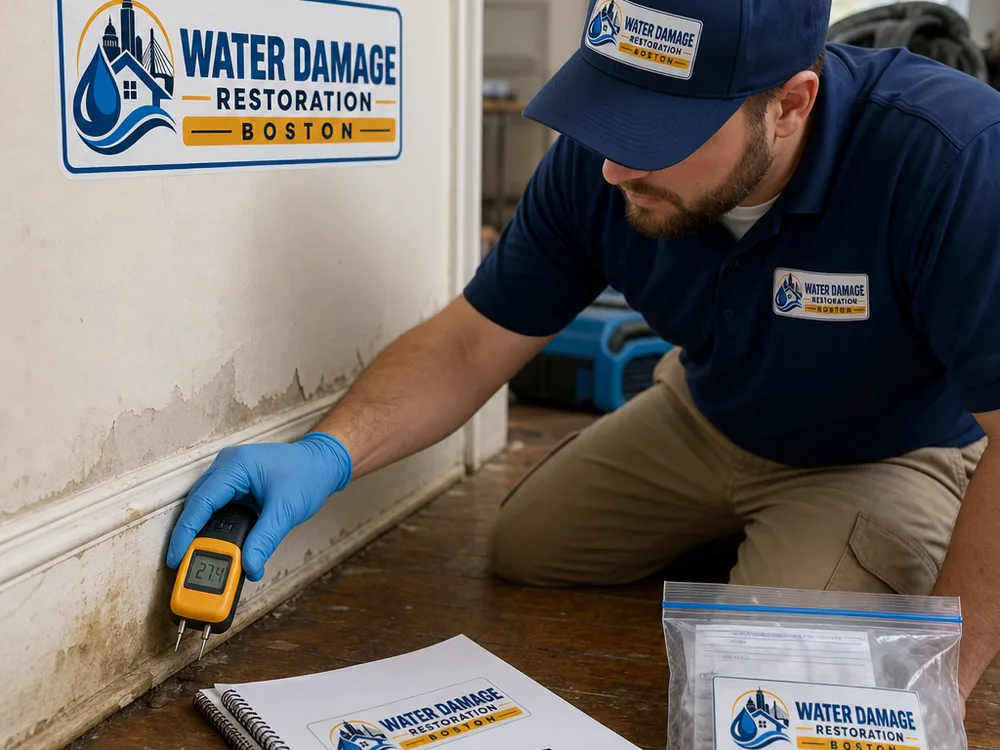
If drywall, insulation, flooring, or framing stayed wet for more than a day or two, testing and moisture checks help confirm whether conditions supported growth and where to open up for inspection.
A persistent odor often points to hidden damp materials, trapped humidity, or a small plumbing leak. Moisture mapping helps narrow the search before repairs.
Surface sampling can confirm whether a suspect patch is mold and help separate mold from soot, dust, or other staining so the response matches the problem.
Boston-area basements can see seasonal dampness and humidity swings. Checking walls, slab-adjacent areas, and stored contents can prevent repeated issues.
Written findings and lab results are useful when you need clear documentation for buyers, sellers, landlords, tenants, or property managers.
Inspection Through Recommendations
A focused sequence connects what you are noticing with moisture conditions, useful testing, and practical next steps.
Request Emergency ServiceWe ask where you are seeing issues, when they started, whether there was a known leak, and which rooms are affected. This helps us focus on likely moisture pathways.
We inspect suspect rooms and adjacent areas, then check materials for elevated moisture. In multi-unit buildings, we pay attention to shared plumbing walls and vertical chases where water can travel.
If sampling will change the decision you make, we collect air and/or surface samples using standard methods and a clean chain of handling. If it will not change your next step, we tell you that too.
Samples go to an accredited lab for analysis. When results are back, we explain what they indicate and how they compare to the outdoor control when one was taken.
You get guidance on source control, drying and dehumidification priorities, and when professional remediation or a post-remediation clearance check makes sense.
Planning and Pricing
Most mold inspection Boston visits typically range from about $350 to $850, depending on the size of the property and how many areas need to be checked. A small condo inspection with limited sampling is often at the lower end, while larger homes or multi-area investigations with multiple lab samples can run $850 to $1,500+.
Final price depends on access, including finished basements and tight crawl areas, how many rooms are involved, whether air and surface samples are needed, and how quickly you need scheduling and lab turnaround. Exact cost is confirmed after we understand the property and the questions you want answered.
If you want a straight answer on whether mold is present and what to do next, tell us what you are seeing and we will recommend the right inspection and testing approach.
Call for Emergency HelpHomeowner Questions
You need mold testing when the result will change a decision, such as confirming suspect growth, comparing indoor air to outdoors, or documenting conditions for a sale or rental. If there is clear visible growth and a known moisture source, the priority is usually fixing the water problem and addressing contaminated materials; sampling may be optional.
Most lab results are available within a few business days after sampling, and some rush options may be available depending on the lab. The on-site inspection itself is typically completed the same day as the visit, with documentation and recommendations provided once findings and any lab results are compiled.
We focus on rooms with symptoms and the building areas most likely to feed them: bathrooms, kitchens, basements, around windows, behind or under sinks, and near recent plumbing or roof leak points. In Boston multi-family buildings, we also pay attention to shared plumbing walls and vertical chases where moisture can migrate between units.
Yes, but access and coordination matter. Many condos have common elements behind walls or above ceilings, so we recommend notifying the property manager if shared plumbing, roof areas, or adjoining units may be involved, and we document observations in a way that is easy to share.
No. A musty odor often correlates with dampness, but it can come from wet wood, old carpeting, stored contents, or long-term humidity issues. Moisture measurements and targeted sampling, when needed, help separate odor causes so you do not pay for the wrong fix.
Keep the home in normal living conditions so results reflect reality. A dehumidifier running as you normally use it is fine, but avoid unusual changes right before sampling, like heavy fogging sprays or deep cleaning with strong chemicals, because they can interfere with what we observe and measure.
Yes. A post-remediation clearance check typically includes a visual review of the work area, moisture verification, and air sampling to compare the treated space with an outdoor control when appropriate. Clearance is most useful when containment was used, porous materials were removed, or the area will be reoccupied quickly.
Inspect, Test, Explain
Share what you are noticing and the property type, and we will schedule a mold inspection and explain what testing makes sense for your Boston home or building.