
Inspection focused on moisture
We look for the active source: plumbing leaks, roof or flashing issues, condensation at windows, HVAC or duct sweating, or damp basements and crawl spaces. Without this, mold returns.
Serving Boston, Massachusetts & surrounding areas
Mold Remediation · Boston, Massachusetts
Stop the spread, fix the moisture source, and get a clear remediation plan you can trust. We handle inspections, containment, cleanup, and restoration steps for homes and commercial spaces across Boston.
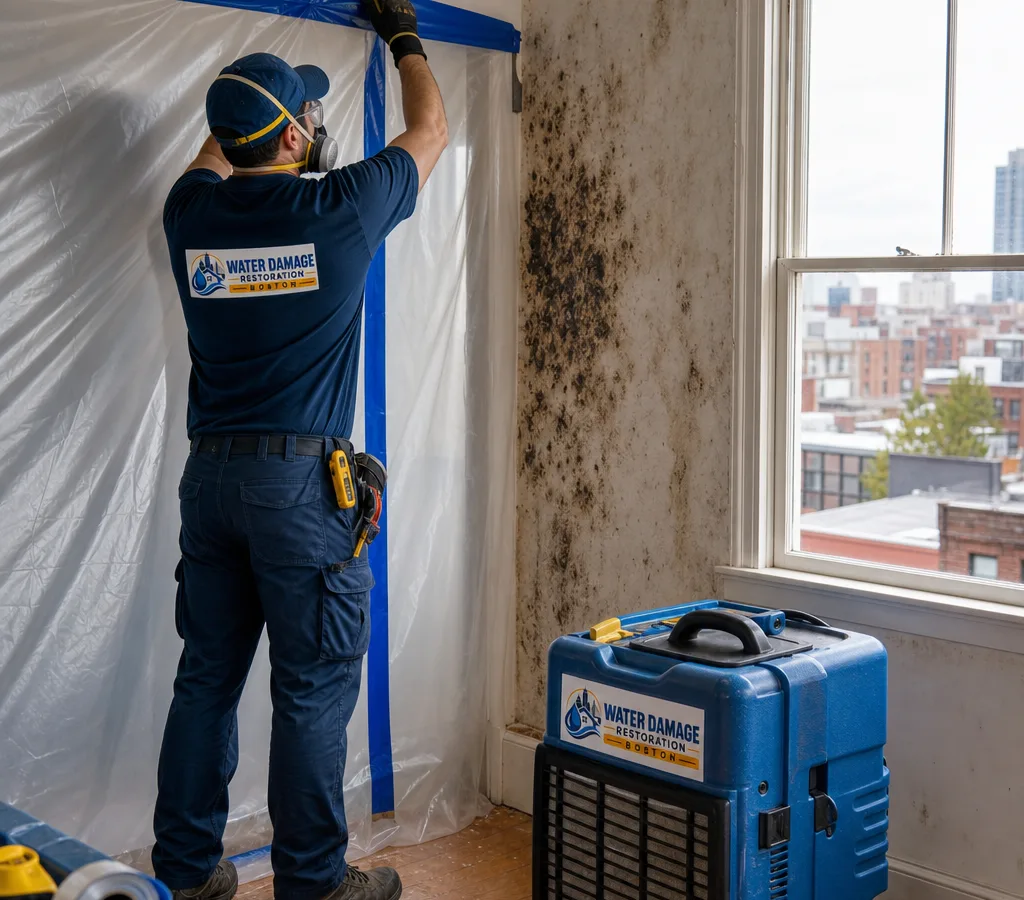
Contain First, Then Remediate
If you are searching for boston mold removal, you are usually dealing with two problems at once: the visible growth and the moisture that keeps feeding it. A real remediation job addresses both. That means controlling where spores travel, removing contaminated materials when needed, cleaning remaining surfaces with the right methods, and documenting what was done so you can move forward with confidence.
Boston buildings add a few common complications. Back Bay and Beacon Hill brownstones often have older wall assemblies and tight chases that make it easy for moisture to linger out of sight. In South Boston and Seaport, newer construction can still see mold around window frames or in mechanical closets when condensation or small plumbing leaks go unnoticed. Triple-deckers across neighborhoods can have shared walls and stacked wet areas that allow a small leak to affect multiple floors.
Our team at Water Damage Restoration Boston approaches mold removal Boston clients hire us for with a simple rule: contain first, then remove and clean, then verify conditions are dry enough to prevent recurrence. If you already have lab results or a prior inspection report, we can review it and build a scope around what is actually needed in the affected areas.
Controlled Remediation
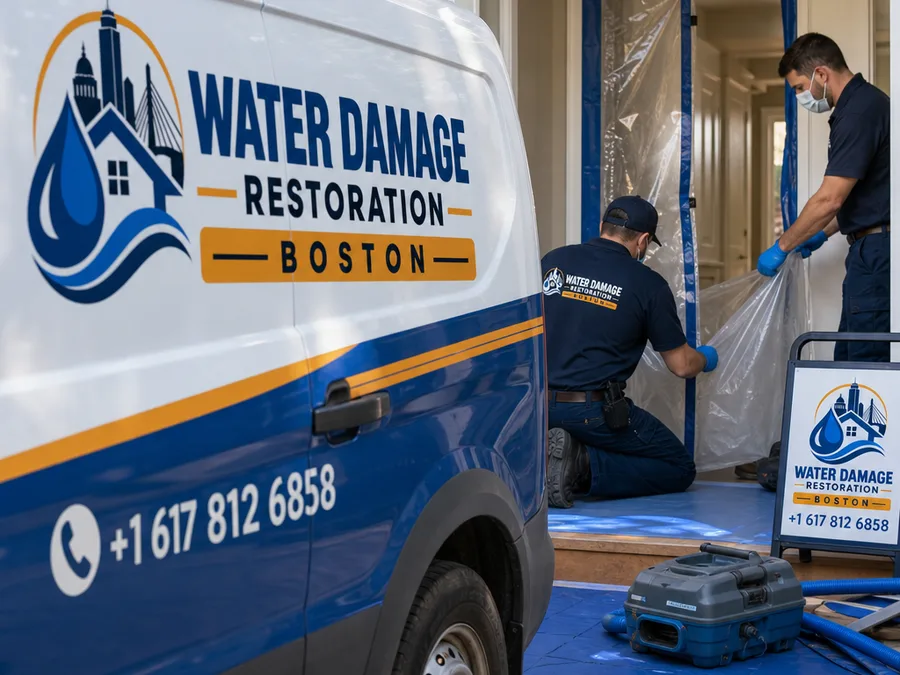
Mold spreads by spores, and remediation can make things worse if the work area is not controlled. For most indoor mold remediation Boston properties need, we start by isolating the affected zone with poly sheeting, establishing negative pressure when appropriate, and running HEPA filtration so disturbed particles are captured instead of drifting into adjacent rooms.
From there, the approach depends on what is contaminated:
The other half of the job is moisture control. We use moisture readings to confirm that framing and surrounding materials are drying properly. In Boston's coastal climate, indoor humidity can stay elevated for long stretches, so dehumidification and air movement matter as much as surface cleaning.
If your situation started with a leak, overflow, or storm-related intrusion, the fastest path to long-term results is to correct the water problem first and then remediate mold in the affected assemblies. Many clients start by addressing the cause with water damage restoration and then move into cleanup once the building is stable and drying.
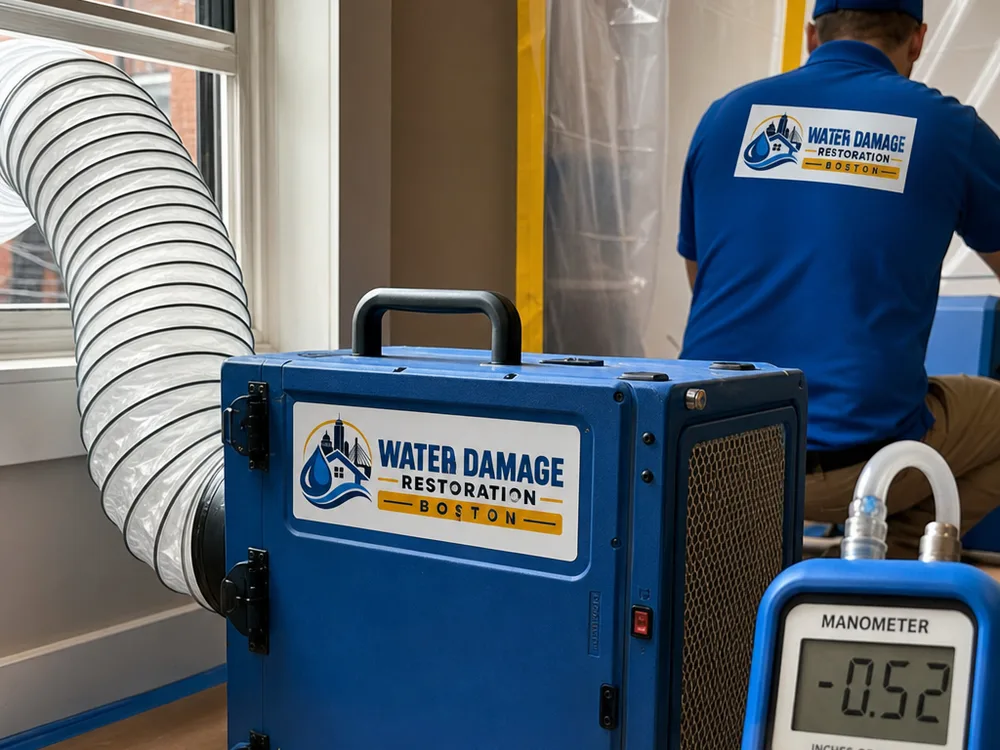
We look for the active source: plumbing leaks, roof or flashing issues, condensation at windows, HVAC or duct sweating, or damp basements and crawl spaces. Without this, mold returns.
Poly barriers, HEPA filtration, and controlled entry protect the rest of the property, which matters in occupied homes and active commercial spaces.
We remove unsalvageable porous materials and handle disposal responsibly, then prep the area so rebuilding can happen safely.
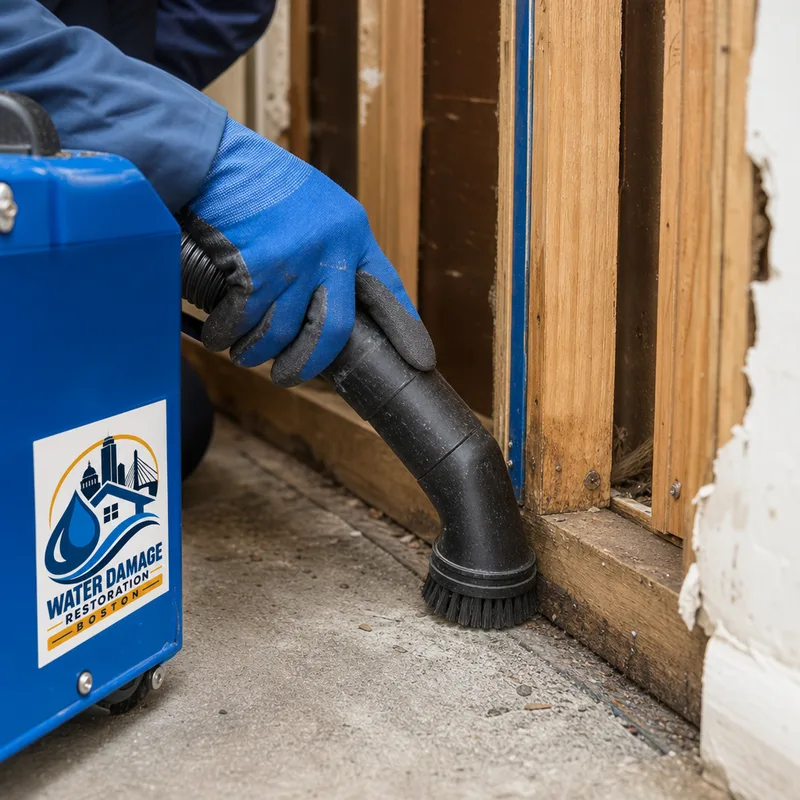
HEPA vacuuming and damp cleaning reduce spores and dust on surfaces, not just the obvious staining you can see.
Dehumidification and moisture checks confirm the area is dry enough to prevent regrowth, especially inside wall cavities and around sill areas.
You get a straightforward explanation of what was affected, what was removed, what was cleaned, and what conditions need to stay in place going forward.
Planning and Pricing
Boston mold removal typically ranges from about $1,500 to $6,500 for many residential jobs, with small, contained areas sometimes starting around $750 to $1,500 and large multi-room or heavy demolition projects running $8,000+.
Your price depends on the size of the affected area, how far contamination extends into drywall or insulation, access such as tight basements, finished spaces, and stacked units, the level of containment required, and whether drying equipment is needed. The exact cost is confirmed after an on-site inspection and a written scope of work.
Inspection Through Handoff
A controlled sequence protects adjacent areas, addresses contaminated materials, and verifies that moisture conditions support a lasting result.
Request Emergency ServiceWe assess visible growth, take moisture readings, and map likely spread paths behind baseboards, around windows, under sinks, and inside closets. You receive a clear plan for what will be contained, removed, and cleaned.
We isolate the work zone and manage airflow so cleanup does not contaminate the rest of your unit or building. This is especially important in condos and multi-family properties common around Boston.
We remove contaminated porous materials as needed, HEPA vacuum remaining surfaces, and perform detailed wipe-down and treatment appropriate to the materials present.
We set dehumidification and air movement to dry the structure, then confirm with moisture checks. If the underlying cause needs a trade repair, we coordinate the next steps so the building stays dry.
We leave the area clean and ready for repairs or rebuild work, and review what to watch for so the issue does not return, including ventilation, humidity, and known leak points.
Controlled Work Practices
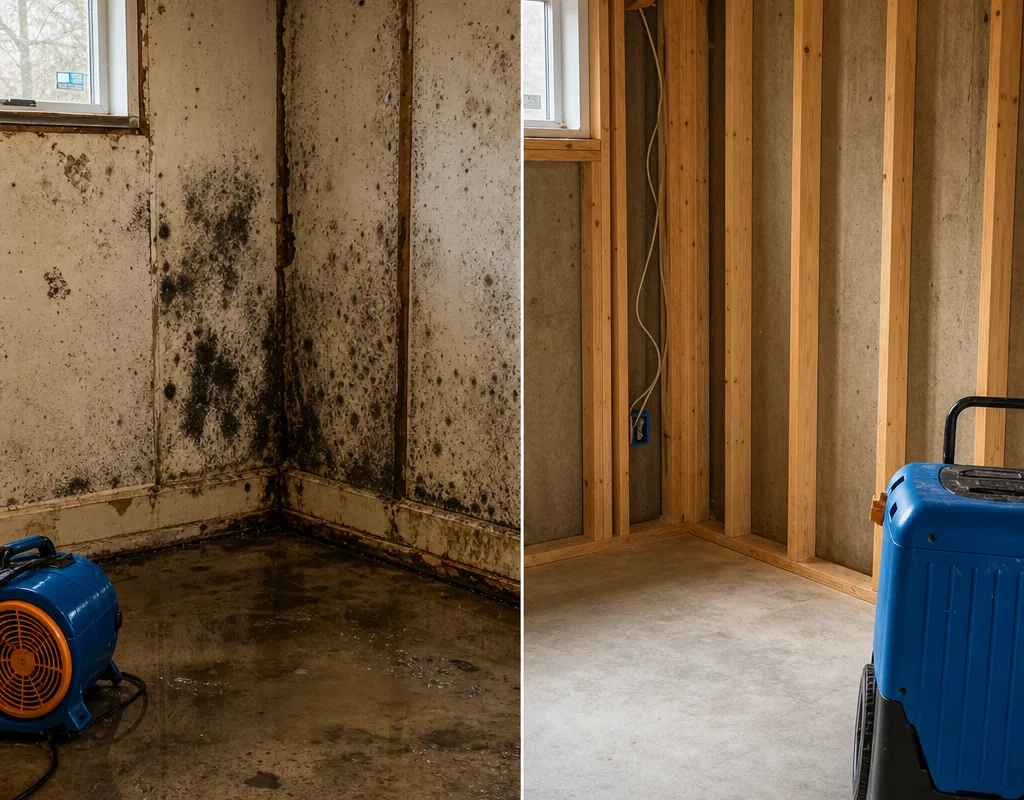
Customer Experiences
“We had a musty smell that kept coming back around a closet wall. The team found moisture behind the drywall, set up containment, removed the damaged sections, and ran dehumidifiers until the readings came down. The apartment smelled normal again and the work area was left clean.”
★★★★★
“As a property manager, I needed a clear scope and a process that would not spread dust through occupied units. They communicated the plan, kept the area contained, and documented what was removed and cleaned so we could schedule repairs.”
★★★★★
Homeowner Questions
Start times depend on the size and containment needs, but many projects can begin soon after an inspection once the scope is approved. If the area is actively wet from a leak, the priority is stabilizing conditions and beginning drying so mold growth does not expand into additional materials.
Drywall removal is common when growth is on the back side of the board, in insulation, or inside a wall cavity that cannot be cleaned effectively from the room side. If mold is limited to a cleanable surface and moisture is controlled, selective cleaning may be appropriate, but we only confirm that after inspecting what is actually affected.
Often yes when the affected area can be fully contained and the work zone is separated from occupied spaces, but it depends on the location, the amount of demo, and whether sensitive occupants are present. In tighter Boston layouts, we plan containment and access carefully so the rest of the unit stays usable when possible.
Mold returns when the moisture source is still present, such as slow plumbing leaks, condensation at windows, poor bathroom ventilation, or humidity that stays high for long periods. A proper remediation plan includes moisture checks and drying verification, not just surface cleaning.
We focus on remediation and moisture diagnostics, and we can work from existing test results if you already have them. If you need formal sampling for a real estate transaction or a specific documentation requirement, we can discuss the best way to coordinate that during the inspection.
Many single-area jobs take 1 to 3 days of active work, but timelines extend when removal is extensive or drying takes longer inside wall cavities or framing. In Boston's humid summer stretches, dehumidification time can be a major schedule factor, and we base the finish line on moisture readings rather than guesswork.
Contain, Clean, Dry, Verify
Tell us what you are seeing and where the moisture may be coming from. We will schedule an inspection, explain the scope in plain language, and outline the steps to restore safe indoor air and prevent regrowth.